
Supporting Executive Functioning & Organization at Home and School
Executive functioning skills are the behind-the-scenes tools that help us plan, start, and complete everyday tasks. For kids and teens, especially those with ADHD, autism, or learning differences, these skills are still developing and often need extra support.
The good news is that with the right tools and a little structure, executive functioning can be strengthened over time in ways that feel manageable for both kids and caregivers.
What Is Executive Functioning?
Executive functioning includes skills like task initiation, organization, time management, working memory, and cognitive flexibility. In real life, this might look like starting homework without a meltdown, keeping track of assignments at school or work, or shifting gears when plans change.
When these skills feel hard, it is not about motivation or effort. It is often about needing the right supports in place.
Tools for Kids & Teens
Simple, visual, and consistent tools tend to work best.
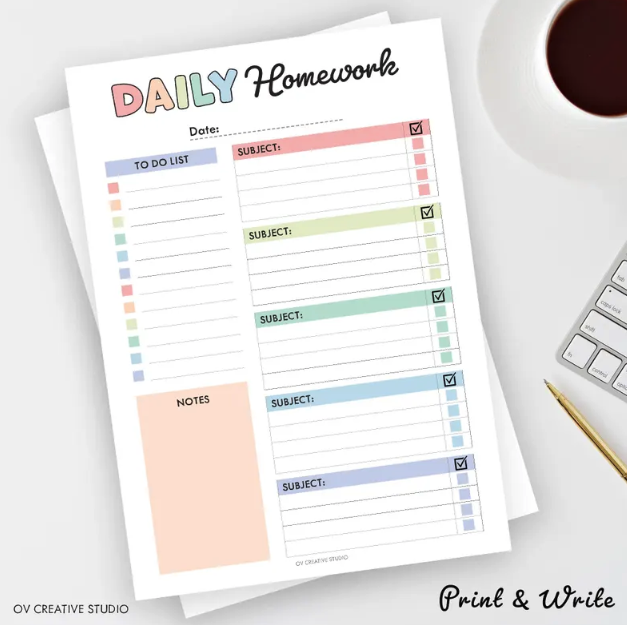
via OvCreativeStudio on Etsy
Printable planners and organizers
Homework planners, daily checklists, and visual schedules can help break tasks into smaller, more manageable steps. Seeing what needs to be done makes it easier to get started.
Apps for time management and focus
Digital tools can be especially helpful for older kids and teens. Apps like Todoist, Tiimo, Forest, and Notion can support planning, time-blocking, and staying on task in an engaging way.
Visual learning supports
Videos and infographics that explain concepts such as working memory, task initiation, and cognitive flexibility can help kids better understand how their brains work. That understanding often leads to more buy-in and less frustration.
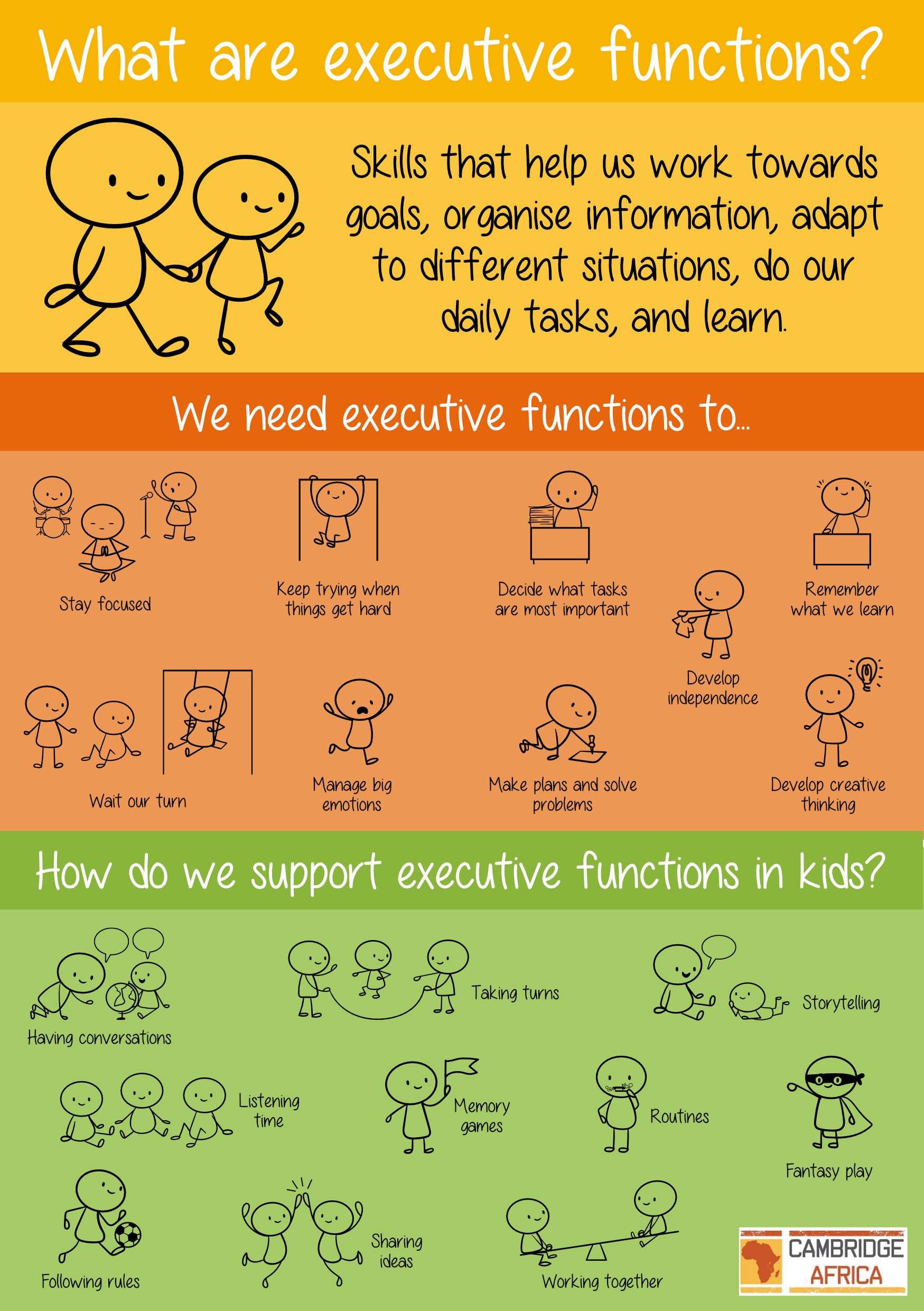
Click photo above to download this infographic PDF. Provided by PEDAL
Support Strategies for Caregivers
Caregivers play a key role in building these skills, but the goal is not to do everything for your child. It is to support them in learning how to do it themselves over time.
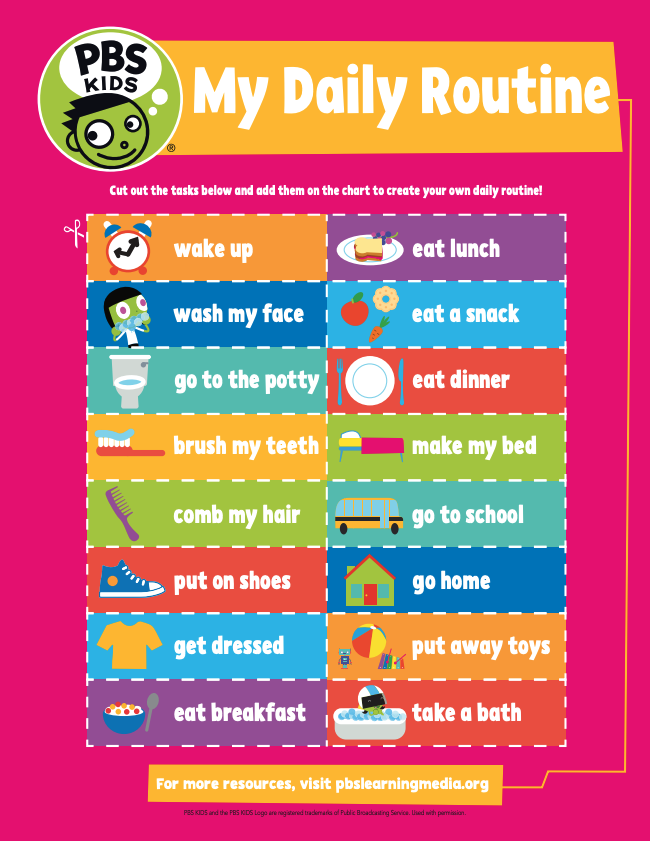
Click photo above to download this Daily Routine PDF. Provided by PBS kids
Scaffold independence
The term “scaffolding” means providing just enough support to help your child succeed, then gradually stepping back. This could look like starting a task together, offering prompts, or helping them create a plan before expecting them to do it on their own. Here is a great article on when to step in vs. when to scaffold.
Create predictable routines
Consistent routines help reduce overwhelm and make expectations clear. Visual supports at home can reinforce these routines and provide helpful reminders without constant verbal prompting.
Partner with your child’s school
If executive functioning challenges are impacting school performance, you can work with teachers and school teams to explore accommodations through a 504 Plan or IEP. Supports might include extended time, organizational check-ins, or modified assignments. This guide lists steps for gathering documentation, working with your child’s school, and advocating for a plan.
Building Skills Over Time
Executive functioning is not something that changes overnight. It develops with practice, support, and the right environment.
Small shifts like adding a visual schedule, trying a new app, or adjusting how you support task completion can make a meaningful difference over time.